
Hospital logistics · · 5 min read
When Equipment Goes Down After Hours: How a Good Hospital Logistics Company Responds
Equipment does not fail on a schedule. It fails near the end of a night shift, on a holiday weekend, or an hour after the person who usually handles shipping has gone home.
A ventilator throws an error. An infusion pump needs a swap and the spare is at another campus. An imaging part arrives at the wrong building while the service engineer waits. When it happens after hours, the logistics company you call makes a real difference to how the rest of the night goes. Below is how a good hospital logistics company should respond, from the first ring to the final signature.
Most delays happen at the edges, not on the road
People tend to judge a carrier by the drive. The drive matters, but most lost time happens before the vehicle moves and after it arrives: a call that goes unanswered, details that were never asked for, a driver at the wrong door, nobody available to sign. A strong response is mostly about handling those edges without needing to be reminded.
The scenario
Late at night, a biomed technician at a medical center finds that a ventilator in use needs to be replaced. The nearest available replacement is at a sister facility elsewhere in the region. The receiving unit wants it as soon as it can safely get there. The technician has the dispatch number saved and makes the call.
Step by step, from the first call to the signature
1. A person answers the call.
The biomed technician calls dispatch and a live dispatcher picks up. There is no phone tree and no callback form. The dispatcher confirms it is an urgent run and opens a job right away.
2. Dispatch collects the details that matter.
What the device is and whether it sits on a stand or cart, rough dimensions and weight, whether it must stay upright, the exact pickup address and entrance, who will release it, the delivery address, the receiving department and who will sign. The dispatcher reads the key points back so nothing is misheard.
3. A matched vehicle is assigned and the caller hears back.
Dispatch picks a vehicle that suits the load, assigns a driver and tells the caller who is on the way. A tracking link goes to the people on both ends who need it.
4. Pickup is careful, not rushed.
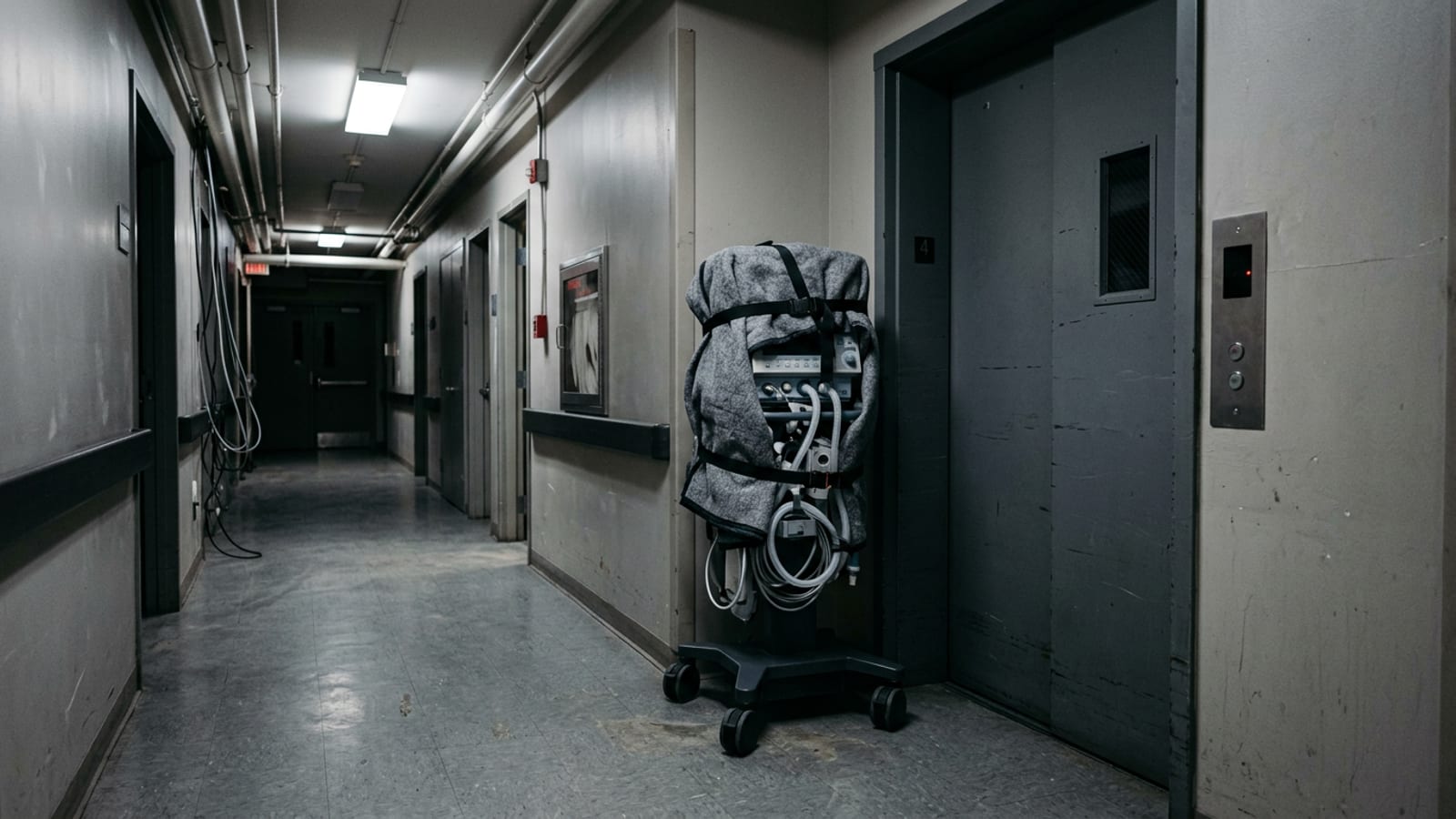
The driver goes to the agreed entrance, meets the releasing contact, checks the device against the job and notes its condition. The ventilator is wrapped, kept upright and strapped so it cannot shift. The releasing contact signs and the pickup time is recorded.
5. The drive goes straight there.
No other stops along the way. The vehicle is GPS tracked, so the receiving unit can watch it approach instead of calling for updates. If anything changes on the road, dispatch lets the receiving contact know.
6. The handoff happens at the receiving department.
The driver brings the device to the department named on the job, not a closed loading dock or the main lobby. The receiving contact checks it and signs.
7. The paperwork closes the job.
Proof of delivery records who signed, when and where. The pickup and delivery records, along with the GPS trail, are available to the hospital for its own files.
Where after-hours runs usually go wrong
Each of these is common, and each one is preventable with a few questions up front:
- Nobody answers. A voicemail at night can mean the first real response comes the next morning.
- The wrong door. A driver sent to a main entrance that locks overnight loses time tracking down security.
- No one to release or receive. Equipment sits because the person with authority to hand it over, or sign for it, has gone home.
- Missing handling notes. A device that should travel upright gets laid flat because nobody mentioned it.
A good provider asks the questions that head these off. Your team can make it even easier by having the answers ready before anything breaks.
Have this ready before you call
Print it, pin it near the biomed bench, or save it in your on-call notes. The more of this you can give on the first call, the faster a driver can be on the way:
The device. Its name, the model if you know it, and whether it is on a stand, a cart or in a case.
Size and weight. Approximate is fine. A couple of photos help the dispatcher pick the right vehicle.
Handling notes. Upright only, fragile parts, and any accessories or cables that travel with it.
Pickup details. Full address, building, entrance or dock, and the name and number of the person releasing it.
Delivery details. Full address, receiving department, entrance, and the name and number of the person signing.
Update contacts. Who should get the tracking link and the proof of delivery.
How we handle after-hours calls
At USA Medical Hot Shot Transporters, dispatch is open 24/7/365 and a person answers. We run hot shot and STAT delivery of critical medical equipment across Virginia, North Carolina, South Carolina, Maryland and Washington DC from our regional hub in Richmond, VA. Runs are GPS tracked, and our drivers are trained to HIPAA standards. Our How it works section shows the same flow from your side of the phone, and the Equipment section lists the kinds of devices we move.
Night calls come from all over the area we serve, including Virginia Beach, Raleigh, Columbia and Rockville. Find your area on the Coverage map, or read the FAQ for more on booking.
Frequently asked questions
- Can we book an urgent equipment run in the middle of the night?
- Yes. Our dispatch is open 24/7/365 and a person answers at 1-866-216-7742, including nights, weekends and holidays.
- What details does dispatch need from us?
- What the device is, its approximate size and weight, any handling needs, the pickup and delivery addresses with the right entrance, and who will release and receive it.
- Who signs for the equipment at delivery?
- The person your team names when booking. Telling dispatch who that is, and which department they are in, keeps the handoff quick and keeps the device from waiting at the wrong door.
- Can our team follow the delivery while it is on the road?
- Yes. Runs are GPS tracked, so the receiving team can see the vehicle on its way instead of calling for updates.
Equipment down right now? Call dispatch.
A person answers at any hour. Have the device, pickup and delivery details ready, and we will take it from there.
See more runs and tips on our Facebook page (opens in a new tab)